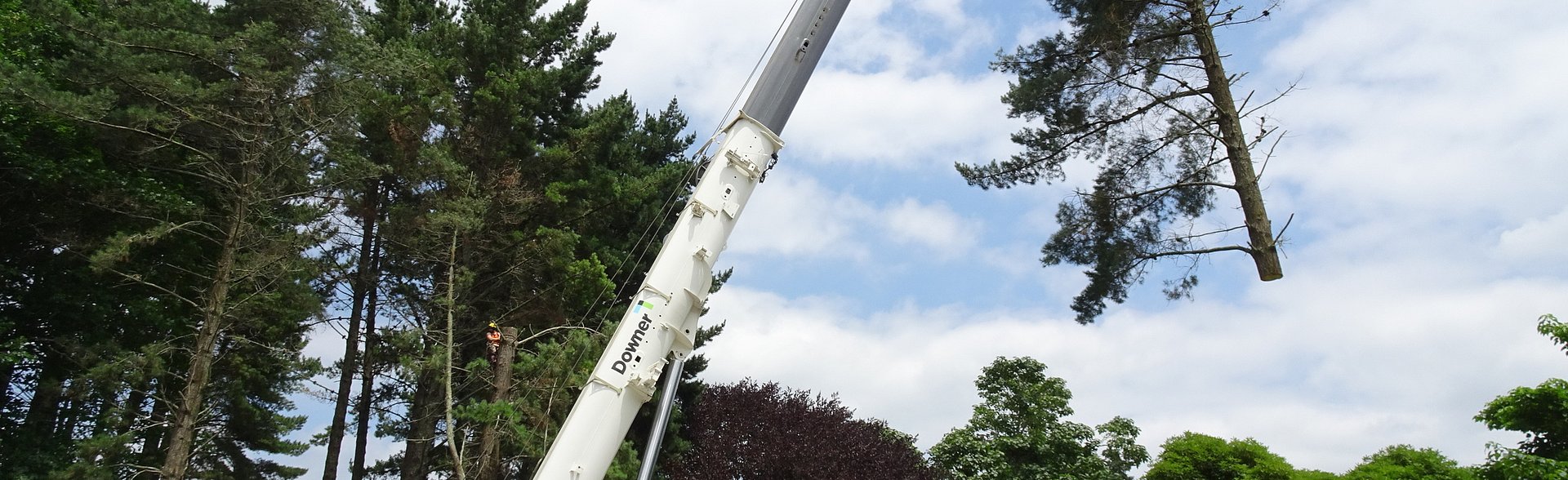
7 Signs It May Be Time to Remove a Tree
Trees are one of the most valuable features of any property. They provide shade, improve air quality, support wildlife, and add character that can take decades to establish. However, there are times when removing a tree is the safest and most responsible option.
At Tree Menders, we always aim to preserve healthy trees where possible. Our first recommendation isn’t automatically tree removal—in many cases, professional pruning or ongoing maintenance is enough. But when a tree becomes unsafe, diseased, or unsuitable for its location, removal may be the best long-term solution.
If you’re wondering whether it’s time to remove a tree from your Hamilton property, here are seven signs to look for.
1. The Tree Has Large Dead Branches
Dead branches are one of the most common hazards we encounter. While a few small dead twigs are normal, large dead limbs can fall without warning, particularly during strong winds or storms.
If branches overhang your home, driveway, neighbour’s property or a public footpath, they can pose a significant safety risk.
An arborist can assess whether selective pruning is enough or whether the condition of the tree warrants removal.
2. The Tree Is Leaning
Not every leaning tree is dangerous. Some trees naturally develop a lean as they grow.
However, if a tree has recently started leaning, or you notice cracked soil, exposed roots, or lifting ground around the base, it could indicate root failure.
This is particularly important after severe weather or prolonged wet conditions.
3. The Trunk Shows Signs of Decay
Decay isn’t always obvious from the outside.
Warning signs include:
Large cavities
Fungal growth around the base
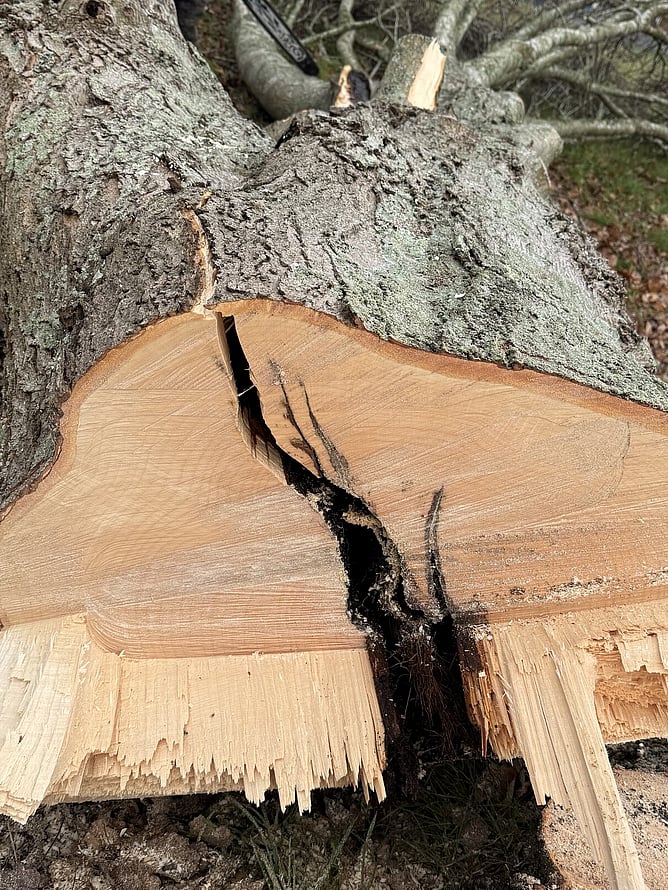
Cracks in the trunk
Loose or missing bark
Hollow sounds when tapped
Some trees can safely tolerate internal decay, while others become structurally unstable. A professional assessment helps determine the level of risk.
4. The Tree Is Too Close to Buildings
Trees planted decades ago were often much smaller than they are today.
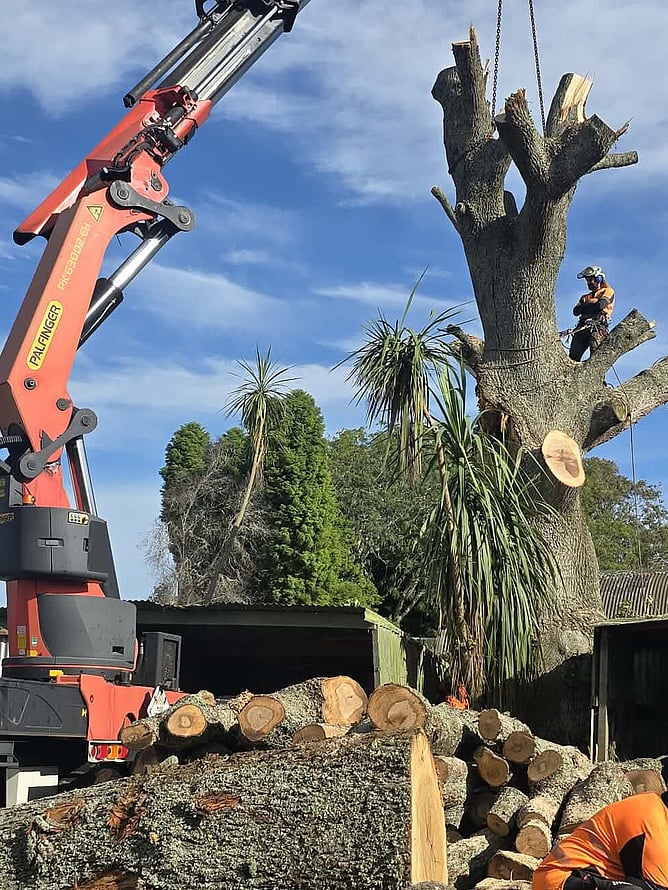
As they mature, branches may begin contacting roofs, gutters or fences, while roots can interfere with retaining walls, driveways and underground services.
Sometimes careful pruning solves the issue. In other situations, removal and replacement with a more suitable species may be the better long-term option.
5. Storm Damage Has Compromised the Tree
Strong winds can split trunks, tear limbs from the canopy or weaken major branch unions.
While some storm-damaged trees can recover with corrective pruning, others become structurally unsafe.
It’s always worth having a damaged tree inspected before assuming it needs to be removed.
6. The Tree Is Declining
Healthy trees generally change gradually over time.
If you notice:
Sparse foliage
Dead sections of the canopy
Early leaf drop
Poor seasonal growth
Repeated branch dieback
the tree may be under significant stress.
The cause could be disease, root damage, drought, soil compaction or age.
Early diagnosis often provides more options.
7. The Tree Is No Longer Suitable for the Site
Sometimes there’s nothing wrong with the tree itself.
It may simply have outgrown its location.
Common examples include:
Blocking planned construction
Interfering with new landscaping
Growing beneath powerlines
Reducing natural light
Causing ongoing maintenance issues
Removing an unsuitable tree and replacing it with a better species can improve the usability and appearance of your property for years to come.
Do All Trees Need to Be Removed?
No.
One of the biggest misconceptions is that every unhealthy-looking tree should come down.
In many cases, professional pruning, deadwood removal, soil improvement, or ongoing monitoring can significantly extend a tree’s life.
At Tree Menders, our goal is always to recommend the solution that’s best for both the customer and the tree.
Why Choose a Qualified Arborist?
Tree removal is one of the most technical and potentially hazardous aspects of arboriculture.
Large trees often require specialised climbing, rigging and dismantling techniques to ensure they’re removed safely without damaging nearby buildings, gardens or neighbouring properties.
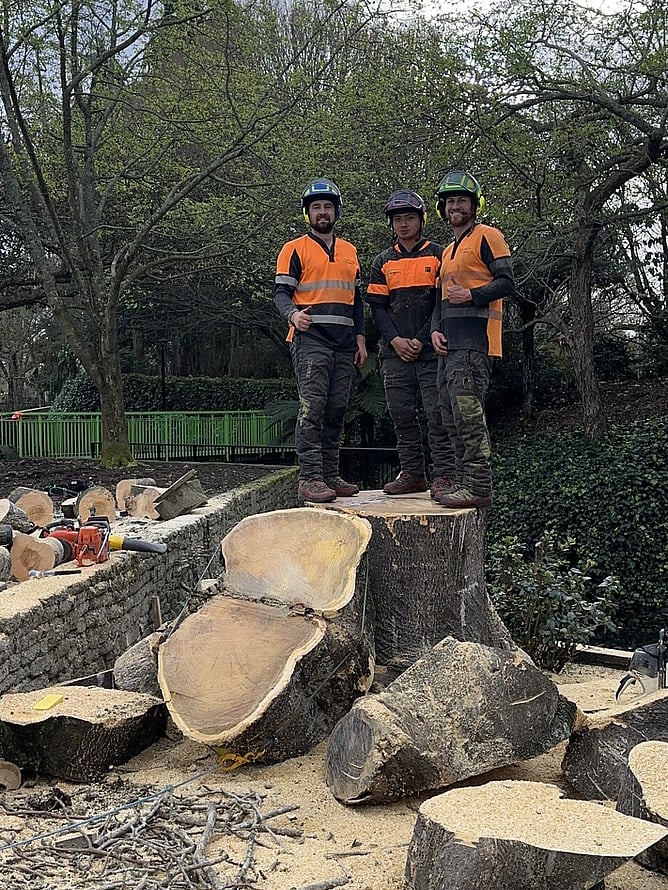
Using a qualified arborist means the work is completed safely, efficiently and with careful consideration for the surrounding landscape.
Professional Tree Removal in Hamilton
Tree Menders provides professional tree removal services throughout Hamilton and the wider Waikato. Whether you’re dealing with a hazardous tree, storm damage, or a tree that’s simply outgrown its location, our experienced team can assess the situation and recommend the most appropriate solution.
If removal is necessary, we’ll carry out the work safely, efficiently and with respect for your property. We can also provide stump grinding, mulch recycling, and advice on suitable replacement trees if required.

